

For an early hardscaping budget, Earth Art’s hardscaping service guide lists patio planning ranges of $7,500–$15,000 for 200–350 square feet, $15,000–$30,000 for 350–600 square feet, and $30,000 or more for 600-plus square feet. These are patio examples. A connected project with walkways, retaining walls, steps, or a driveway needs a budget for those elements and their shared site work.
If you are planning hardscaping in Troy or elsewhere in Oakland County, the useful question is: what finished result does the quote include? A patio beside your door and a patio reached by new steps across a sloping yard may have the same paved area but require different work.
Request a hardscaping estimate with your feature list and budget, or use the breakdown below to decide what belongs in the first conversation.
Separate the Paved Surface from the Complete Project
Start with the places you want to sit, walk, park, or cross a change in elevation. Measure paved surfaces in square feet, describe walls by length and height, and identify steps and connections individually. A single square-foot rate cannot describe all of those purchases.
| Budget item | What to define in the quote |
|---|---|
| Patio, walkway, or driveway | Dimensions, intended use, selected paver or stone, pattern, borders, and edges. |
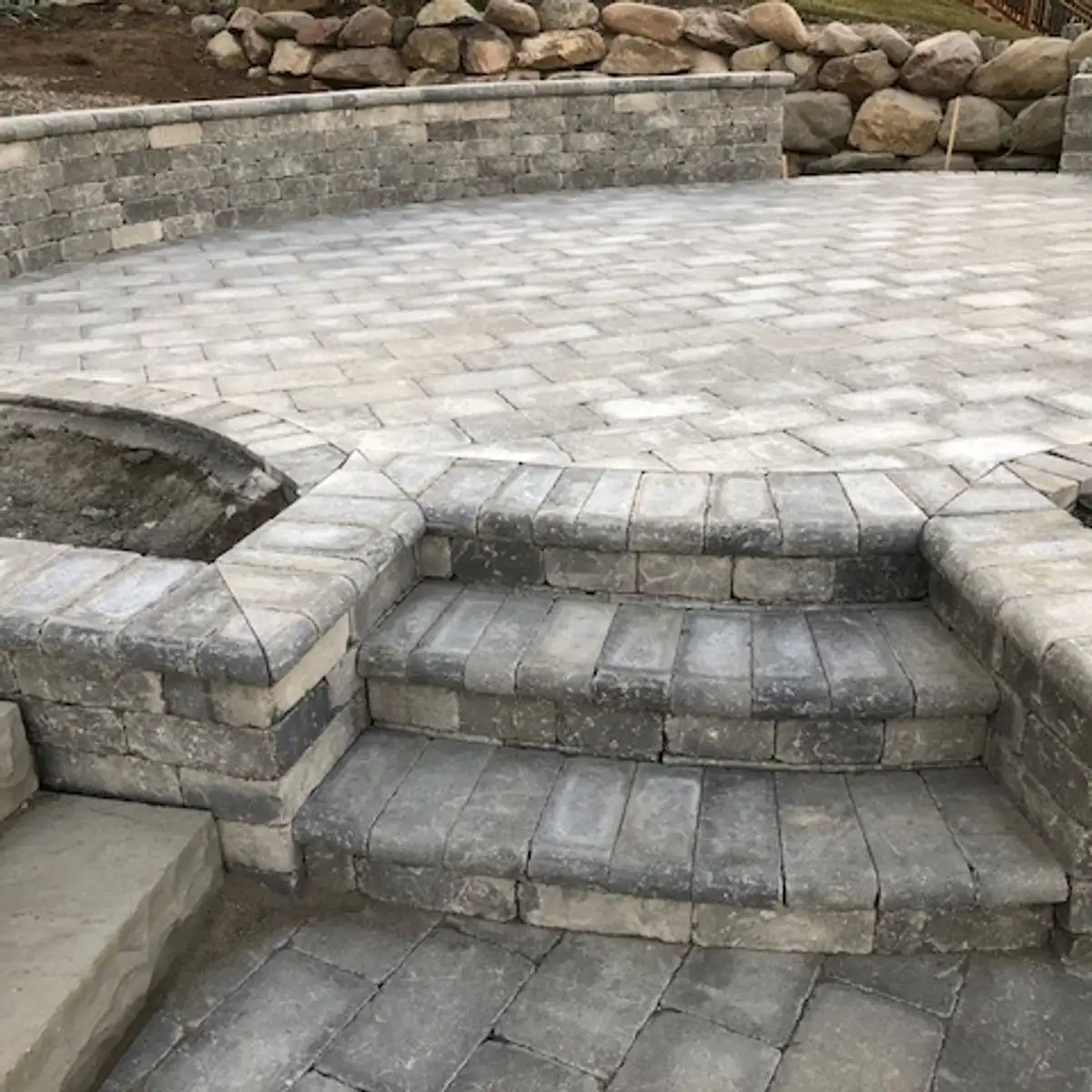
| Walls and steps | Location, wall length and height, step count, caps, and transitions to adjoining paving. |
| Site preparation | Existing material removal, excavation, hauling, base construction, grading, and drainage. |
| Finishing and coordination | Lawn and bed restoration, utility work where needed, design, and responsibility for applicable approvals. |
Ask for optional features as separate prices against one defined base scope. If a seating wall is already included, adding a separate wall allowance would count it twice. If it is excluded, a patio-only total will understate your intended project.
Why Two Similar Patios Can Have Different Costs
Picture two yards with the same proposed 400-square-foot patio. In the first, the work area is open and the new surface connects directly to an existing walk. In the second, old paving must come out, materials must pass through a narrow side yard, and the patio needs steps and a retaining wall to meet the lawn. The footprint matches; the work does not.
Techo-Bloc’s backyard planning guide identifies material choices, features, labor, access, and soil among the factors that affect price. Share photos of your access route as well as the area you want to improve.
Keep Base and Drainage Work in the Budget
The layers beneath the finished surface support the paving. The Concrete Masonry & Hardscapes Association’s base guidance explains that intended loads, soil strength, drainage, and freezing conditions affect base requirements. That makes site evaluation relevant to a Michigan budget before choosing a surface material.
Ask the proposal to describe the base and water-management work for your site. An existing base should be evaluated before treating it as reusable. Reducing necessary preparation to afford a larger paved area can leave the underlying problem unresolved.
For local planning context, see Earth Art’s Troy landscaping page. Bring up standing water, slopes, mature trees, and access constraints during the site visit; your own yard’s conditions matter more than a nearby project’s price.
Reduce Optional Complexity Before Cutting Essential Work
A smaller patio that still fits your table and chairs, a simpler perimeter, or fewer decorative borders may help focus spending. Techo-Bloc’s planning guide recommends simple shapes and considering phases when the budget is limited. Have alternatives priced for your yard so you can see the actual difference.
For phased work, settle the full layout and elevations first. Discuss how a later walk, wall, lighting connection, or fire feature will meet the first installation. Ask what needs to happen now and what can wait without reopening finished work. Phasing spreads the investment, but extra mobilization and restoration may affect the eventual total.
Earth Art’s landscape design service can help coordinate those connections. For a feature-specific budget, read the natural stone patio cost guide, retaining wall cost guide, or fire pit cost guide.
Compare Quotes for the Same Finished Yard
Use one layout and material selection when requesting alternatives. Confirm the paving dimensions, wall and step scope, removal and disposal, base, drainage, edges, joint materials, and restoration. Then identify allowances, exclusions, and any permit, design, or specialist work priced separately.
Ask how hidden conditions and requested changes will be approved and priced. A clear written scope helps you decide whether a lower total reflects a simpler project, a different material, or missing work. Bring a priority list: the gathering area you need now, the connections that make it usable, and the extras you could add later.
Hardscaping Cost Questions
How much should I budget for hardscaping?
Earth Art’s hardscaping service page lists patio planning ranges of $7,500–$15,000 for 200–350 square feet, $15,000–$30,000 for 350–600 square feet, and $30,000 or more for 600-plus square feet. Those are patio examples, not a whole-yard price. Have walkways, walls, steps, demolition, drainage, and restoration identified in a site-specific proposal.
Why do hardscaping quotes differ for the same square footage?
The same paved area can require different excavation, base preparation, drainage, access, cutting, and grade transitions. One proposal may also include walls, steps, disposal, or lawn repair that another excludes. Compare the layout, materials, included work, allowances, and exclusions before comparing the total.
Can I reduce hardscaping cost by building in phases?
Phasing lets you spread spending over time, but it does not guarantee a lower total. Plan the final elevations, drainage, access, and future connections before the first phase. Ask which work must happen together and whether later phases will require additional mobilization or disturbing finished surfaces.