

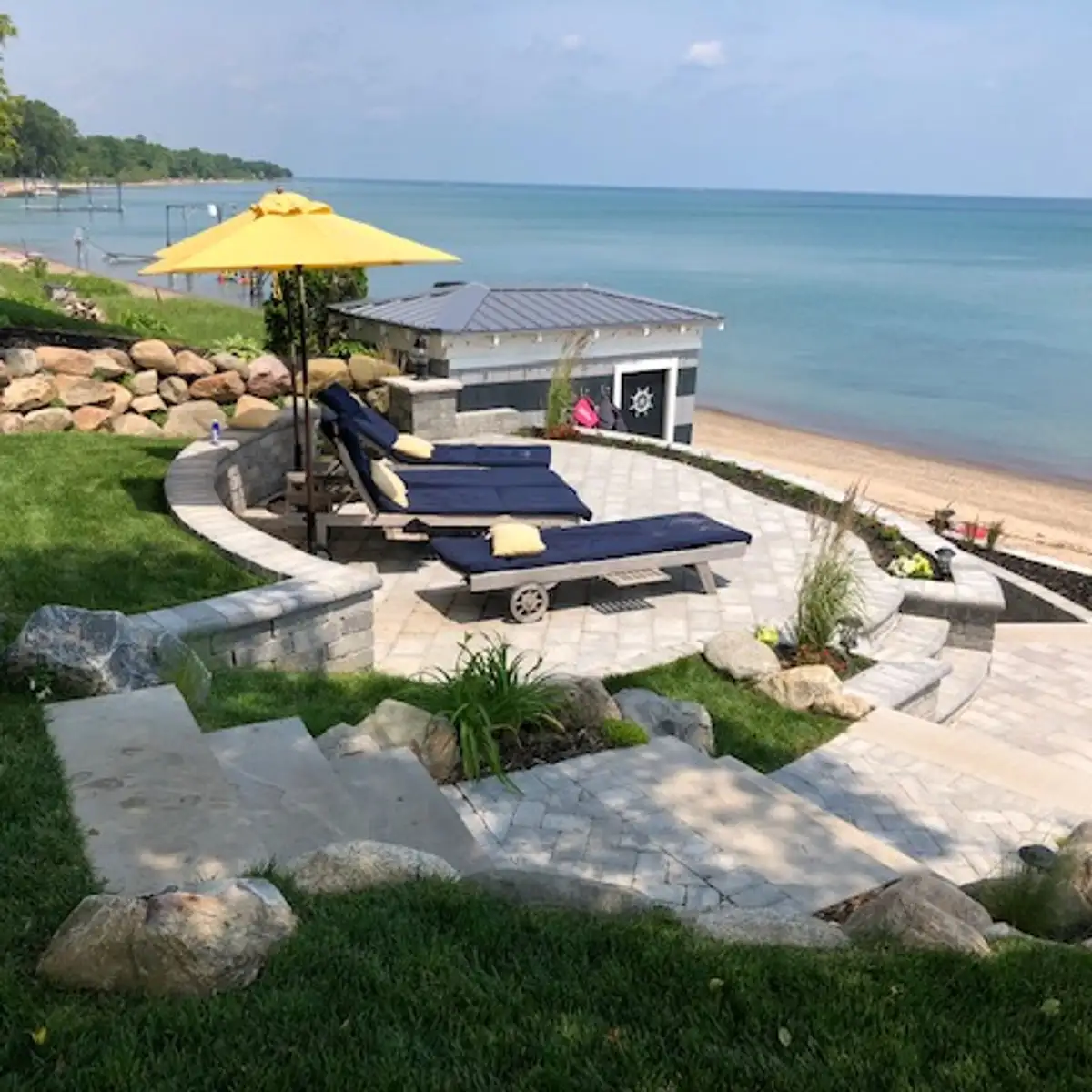
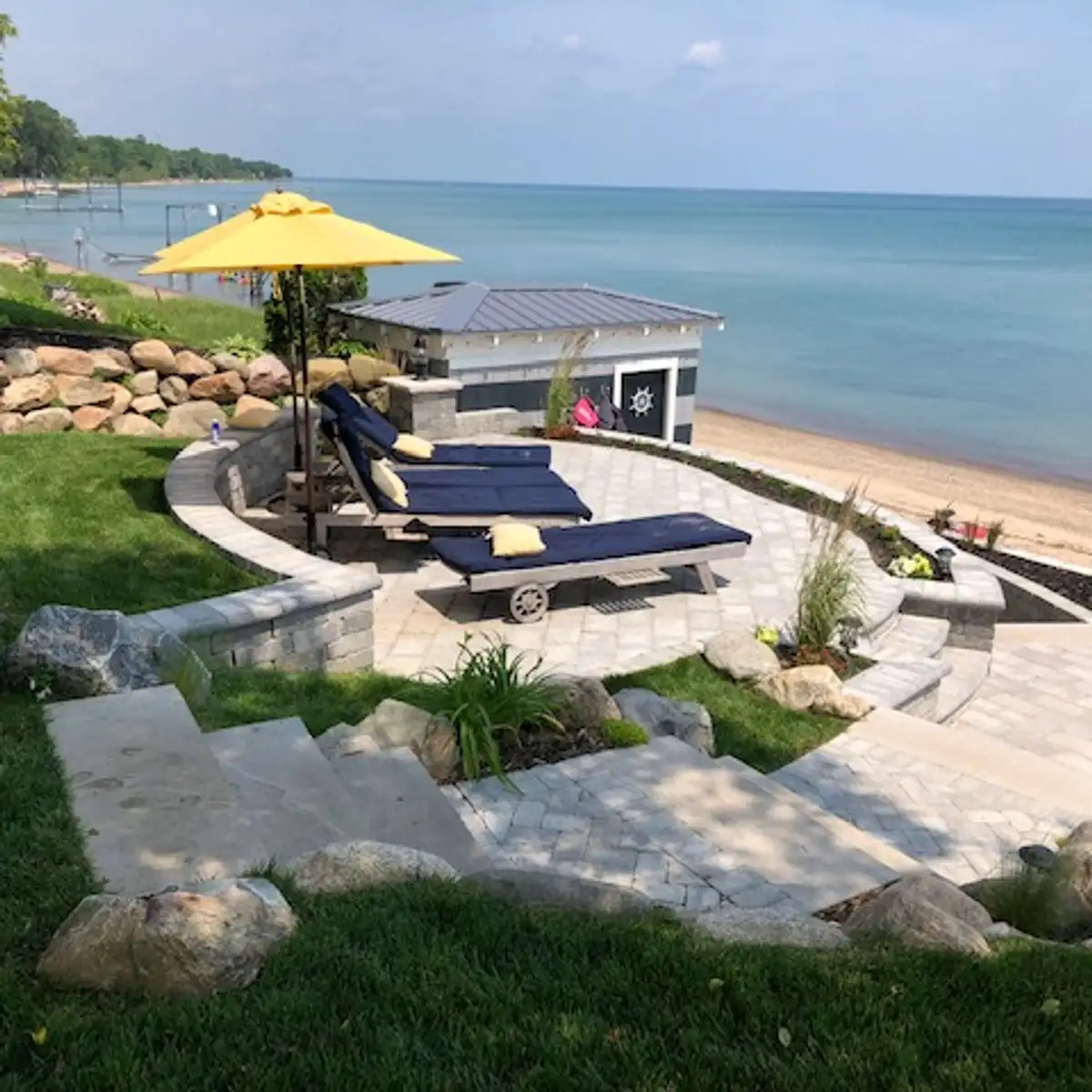
The best outdoor living spaces start with a plan, not a purchase. Before choosing a fire pit style or picking patio pavers, you need a clear picture of how you will actually use the space, what your property can support, and how to sequence the construction so every dollar works as hard as possible. This guide covers the full planning process for outdoor living spaces in Oakland County, from initial site assessment through final construction timelines.
Start with How You Use the Space
Every successful outdoor living project begins with the same question: what do you want to do out here? The answer shapes every decision that follows, from the size of the patio to the type of fire feature to the placement of lighting.
Oakland County homeowners typically want one or more of these outdoor functions: cooking and dining, relaxing and conversation, entertaining groups, or quiet retreat. Each function requires different features, different square footage, and different relationships to the house and yard. A family that hosts weekend barbecues needs a different layout than a couple who wants a quiet fire pit area for evening use.
Before contacting a contractor, spend two or three weekends paying attention to how your family actually uses your yard. Where do people naturally gather? Which direction do you face when you sit outside? Where does the afternoon shade fall? Where does wind come from? These observations matter more than any Pinterest board because they reveal the patterns that your outdoor space needs to support.
Evaluate Your Property
Oakland County properties present specific conditions that directly affect outdoor living design. Understanding these conditions early prevents expensive surprises during construction.
Grading and Drainage
The slope of your yard determines where a patio can go and how much site preparation it will need. A level area close to the house is the simplest scenario. A sloped yard may require retaining walls to create a level pad, which adds cost but also creates opportunities for multi-level designs with built-in seating walls and terraced planting beds. Oakland County's clay-heavy soils hold water aggressively, so proper drainage must be designed into any outdoor living space from the start. Water that pools on or near a patio will eventually undermine the base.
Sun and Wind Exposure
Track where the sun hits your yard at different times of day. In Oakland County, south-facing spaces get full afternoon sun from May through September, which is great for spring and fall use but can be uncomfortable in July and August without shade. West-facing spaces catch the evening sun, which makes them ideal for dinner and sunset entertaining but requires shade solutions during late afternoon. Consider whether you will need a pergola, shade sail, or strategically planted trees to manage sun exposure during peak summer months.
Proximity to the House
The closer your outdoor living space is to the kitchen, the more you will use it. This is not an opinion. It is a pattern we have observed consistently across 39 years of building outdoor spaces in Oakland County. Homeowners who build a patio 50 feet from the back door use it half as often as those with a patio right off the kitchen. If you are planning an outdoor kitchen, direct access from the indoor kitchen is especially important for carrying food, supplies, and dishes back and forth.
Choose Your Features
An outdoor living space is built from a combination of features that work together. Here are the core elements and what each contributes to the overall space.
The Patio Foundation
Every outdoor living space needs a solid surface. Paver patios are the standard choice in Oakland County because they handle Michigan's freeze-thaw cycles without cracking and they can be repaired individually if any paver shifts or settles. Techo-Bloc pavers offer the widest range of colors, textures, and patterns for creating distinct zones within your outdoor space. Plan for a minimum of 300 square feet for a basic dining and seating area. Most complete outdoor living spaces in Troy, Bloomfield Township, and Rochester Hills run 500 to 1,200 square feet.
Fire Features
A fire pit or fireplace extends the usable season of your outdoor space by 8 to 10 weeks. In Oakland County, that means comfortable outdoor use from mid-April through mid-November instead of just May through September. Wood-burning fire pits cost less and provide the traditional campfire experience. Gas fire pits offer push-button convenience and adjustable flame height with no ash cleanup. Built-in fireplaces create a dramatic focal point but require a larger footprint and higher investment. Place fire features at least 10 feet from the house and any overhanging trees, and position them so prevailing winds carry smoke away from seating areas.
Outdoor Kitchens
A basic outdoor kitchen starts with a built-in grill and a section of countertop for prep space. From there, you can add a sink with running water, a refrigerator, storage drawers, and dedicated serving areas. The kitchen island itself is constructed with a concrete block core, waterproofing membrane, and stone or Techo-Bloc veneer that matches your patio. Every component must be rated for Michigan's winters. We use stainless steel appliances, granite or quartzite countertops, and freeze-thaw rated veneers that will not spall or crack after years of exposure.
Landscape Lighting
Outdoor living spaces are used most often in the evening, which means landscape lighting is not optional. It is essential. Plan for three types of lighting: task lighting at cooking and dining areas so you can see what you are eating and preparing, ambient lighting around seating areas to create atmosphere, and path lighting for safe navigation between the house and the outdoor space. Low-voltage LED systems use minimal electricity and last 50,000 or more hours. The critical detail is to plan your lighting layout before construction begins so wire runs can be installed under the patio and through walls during construction rather than added as a disruptive retrofit.
Material Choices for Michigan
Not every material sold for outdoor use performs well in Michigan's climate. Oakland County experiences 50 to 60 freeze-thaw cycles per year, meaning water trapped in porous materials will expand and contract dozens of times each winter. Materials that perform well in Georgia or California may fail within two or three Michigan winters.
For patio surfaces, Techo-Bloc pavers and natural stone are the most reliable choices. Both handle freeze-thaw without deteriorating. As a Techo-Pro certified installer, we install Techo-Bloc products with their full extended warranty, which covers material defects for the life of the product.
For kitchen countertops, granite and quartzite resist staining, heat, and frost damage. Avoid marble and some limestones outdoors in Michigan because their calcium carbonate content makes them vulnerable to acid rain and freeze damage. For seating walls and fire pit surrounds, the same Techo-Bloc or natural stone used on the patio creates a unified look while ensuring consistent durability across every element.
Budgeting Your Outdoor Living Space
Outdoor living costs in Oakland County vary based on the features you choose and the complexity of the site. Here are realistic price ranges based on our recent project history in Troy, Rochester Hills, West Bloomfield, Farmington Hills, and Bloomfield Township.
- Fire pit with paver patio (300-400 sq ft): $10,000-$18,000. Includes excavation, base prep, paver installation, fire pit construction, and polymeric sand joints. This is the most popular entry point for homeowners starting their outdoor living space.
- Patio with fire pit and seating walls (400-600 sq ft): $20,000-$35,000. Adds permanent seating walls, a larger patio footprint, landscape lighting, and upgraded paver materials.
- Complete outdoor living space (600-1,000+ sq ft): $40,000-$80,000+. Includes a multi-zone patio with cooking area, fire feature, dining space, lounge area, integrated lighting, and planting design. Premium Techo-Bloc materials, outdoor kitchen with appliances, and custom stone work.
These ranges include materials, labor, base preparation, and drainage. They do not include gas line installation (typically $1,500-$3,000 for a fire pit or kitchen) or electrical work for appliances (typically $800-$2,000), which require licensed subcontractors.
Phasing Over Multiple Years
You do not need to build everything at once. A phased approach spreads the investment over two or three years while giving you a usable space at every stage. The key is to plan the complete layout upfront so that each phase connects seamlessly to the next. A common phasing approach: year one builds the patio and fire pit. Year two adds the outdoor kitchen and seating walls. Year three completes the lighting, water feature, and final plantings. Each phase is designed to stand on its own while building toward the complete vision. Our landscape design process creates a master plan that makes phasing straightforward.
Construction Timeline for May
May is the ideal month to begin outdoor living construction in Oakland County. The ground has fully thawed, soil conditions support proper base compaction, and there are five full months of construction weather ahead. Here is what a typical project timeline looks like starting in May.
- Week 1: Site preparation. Excavation, rough grading, utility marking, and any necessary drainage work. If retaining walls are needed, wall construction begins during this phase.
- Week 2: Base installation. Aggregate base material is delivered, spread in lifts, and mechanically compacted to 95% density. This is the most important phase because every paver, wall, and feature built above depends on this base.
- Week 3: Paver installation and feature construction. Pavers are laid in the selected pattern, fire pit or fireplace is constructed, seating walls are built, and kitchen island framing begins. Lighting wire is run under pavers and through walls during this phase.
- Week 4: Finishing work. Polymeric sand is installed and activated, kitchen countertops are templated and installed, appliances are connected, lighting fixtures are placed and wired, and final grading around the patio is completed. Plantings are installed in adjacent beds.
This four-week timeline applies to a mid-range project (600-800 square feet with fire pit, seating walls, and lighting). Simpler projects take two to three weeks. Complex projects with outdoor kitchens, water features, and extensive lighting may take five to six weeks. Weather delays are always possible in Michigan, so we build buffer days into every schedule.
Start Planning This Month
If you want to be enjoying a new outdoor living space by mid-summer, May is the time to start the planning conversation. Earth Art Landscaping begins every outdoor living project with an on-site consultation where we assess your property, discuss your vision, review material options, and provide a detailed estimate. With 39 years of experience building outdoor spaces across Oakland County, we know what works in this climate and what does not. Call 810-343-4799 or request a free quote online to schedule your consultation.