

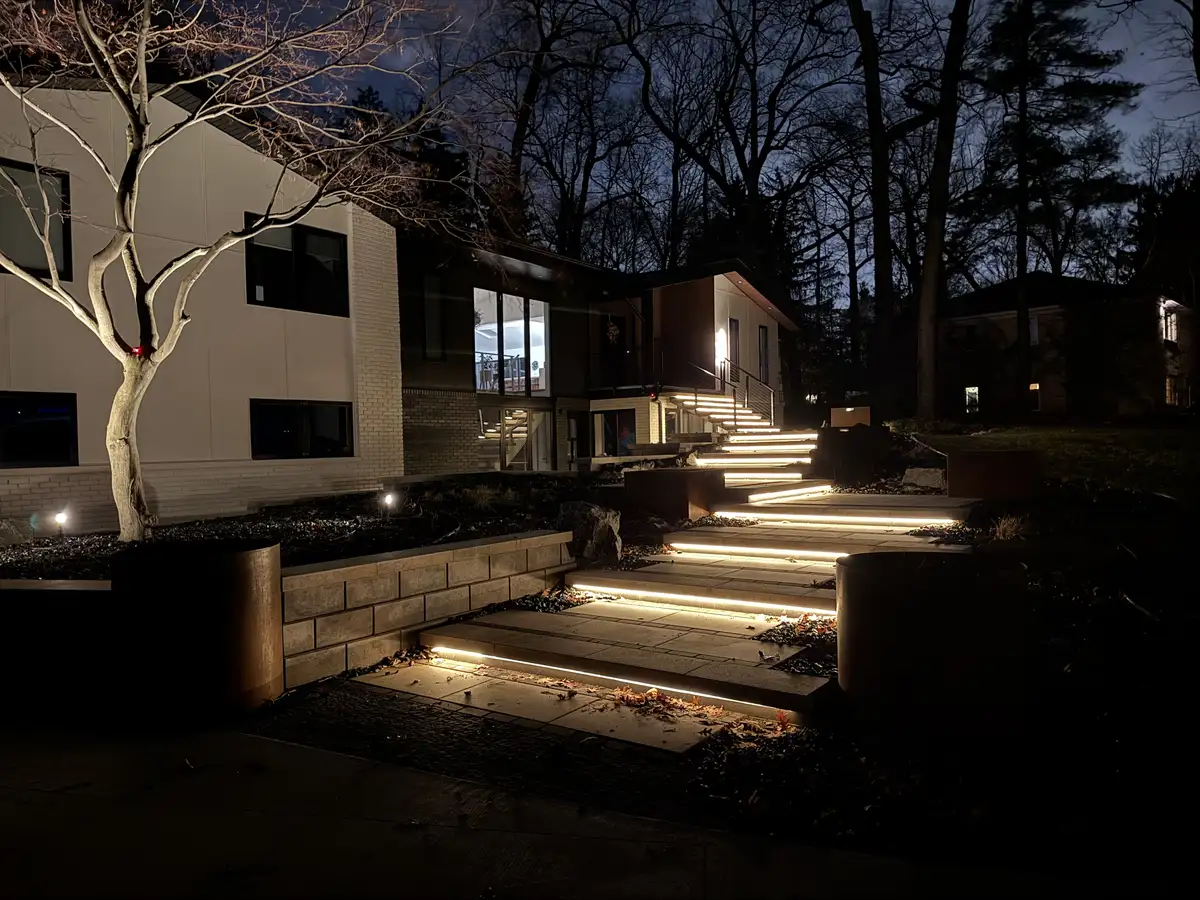
A useful landscaping conversation begins before anyone talks about plants, pavers, or a date on the calendar. First, define the problem, the site conditions, and the finished result. That gives a contractor enough context to shape a realistic scope—and gives you a fair way to compare proposals.
For Troy homeowners, that discussion may connect planting, grade, water movement, mature trees, an aging walk or patio, tight equipment access, and the amount of care the property should need afterward. Earth Art’s landscaping services bring those pieces into one plan. The eight questions below help you prepare for that planning conversation.
Bring These Details to the First Conversation
- Photos of the project area, access route, existing hardscape, and any wet spots after rain
- A short list of what is not working and what you want the space to do
- Healthy trees, useful features, and views you want to preserve
- Your priorities, preferred timing, and ideas that may belong in a later phase
- The level of watering, pruning, cleanup, and seasonal care you are comfortable handling
1. Is This Yard Work or a Coordinated Landscape Project?
The answer changes how the work should be estimated. A defined cleanup or bed refresh may be discussed as a limited task. A project that connects drainage, planting, a walkway, a patio, walls, or lighting needs broader planning because one choice can change the elevation, access, or sequence for another.
Describe the outcome instead of starting with a product list. “Make the side yard easier to walk through” is more useful than “add pavers.” “Create privacy without blocking the window” gives a planting plan a clear purpose. When several outcomes overlap, a landscape design can coordinate them before installation begins.
2. Which Site Conditions Will Shape the Plan?
Ask what the contractor sees in the grade, drainage patterns, soil, sunlight, tree roots, utilities, door and walk elevations, and equipment route. These conditions affect plant selection and preparation, but they also influence how materials reach the work area and how disturbed lawn or beds will be restored.
On an established Troy property, it is especially helpful to point out where water collects, where snow is stored, and which paths or gates must remain usable. Earth Art’s Troy landscaping page explains how mature lots, clay-heavy soil, access, and connected improvements can affect local planning.
3. What Exactly Is Included in the Written Scope?
A total price is difficult to compare without the work behind it. Depending on the project, the proposal may need to identify removal, protection of existing features, excavation, hauling, soil or aggregate preparation, drainage work, material type, plant sizes and quantities, installation, cleanup, and restoration.
Ask for exclusions as well as inclusions. Irrigation changes, electrical work, permits, utility coordination, lawn repair, watering, and future maintenance should not be left to assumption. The scope should also explain how requested changes or concealed site conditions will be reviewed before extra work proceeds.
4. Does an Hourly Rate Tell the Whole Pricing Story?
Usually, it does not. An hourly figure might describe one worker with hand tools or a crew operating specialized equipment. Mobilization, delivery, disposal, supervision, and materials may be included, billed separately, or not required at all. That is why questions such as “Is $100 an hour too much?” cannot be answered responsibly without the full context.
For a short task, ask about crew size, service minimums, equipment, hauling, materials, and cleanup. For design-and-installation work, compare complete scopes written for the same finished result. A lower number is not a savings if important preparation or restoration is missing.
5. Who Is Responsible for Approvals and Coordination?
Before booking, ask whether the planned work may require a utility locate, municipal review, association approval, or coordination with irrigation, electrical, or another trade. Requirements depend on the property and the work, so the proposal should state who will confirm them and who will complete each step.
This conversation matters most when grades, walls, drainage, utilities, structures, or property boundaries are involved. It is better to identify an approval or outside trade before materials are ordered than after the schedule is set.
6. Can the Project Be Phased Without Paying for Rework?
Phasing can make a larger landscape renovation easier to plan, but the sequence matters. Underground work, drainage, structural walls, major grade changes, and hardscape bases generally need to be considered before finish planting, mulch, and lawn restoration.
Ask which parts must happen together and which can wait. A contractor should be able to explain how a future patio, lighting run, planting bed, or walkway affects today’s work. The least expensive version is often a focused plan that preserves sound features and avoids removing new work during the next phase.
7. What Will the Landscape Need After Installation?
Maintenance is part of the design decision. New planting needs establishment care, while beds, paved joints, drains, lighting, and water features each have different ongoing needs. Ask what should happen during the first season and what the normal annual routine may include.
If low maintenance is a priority, say so early. It can influence plant variety, mature spacing, bed size, edging, watering strategy, and the balance between planted and hardscaped space. “Low maintenance” should become specific tasks and expectations, not remain a vague promise.
8. What Must Be Final Before the Project Is Scheduled?
Confirm the drawing or written scope, selected materials, plant quantities, assumptions, exclusions, access route, payment terms, and change process. Ask which selections are still open, whether lead times affect the order of work, and how weather-related schedule changes will be communicated.
This final review is where a proposal becomes a shared plan. You should understand what is being built, why the sequence works, what care begins after installation, and which decisions still belong to you.
Frequently Asked Questions
What is the average cost of a landscaper per hour?
There is no single useful hourly average for every landscaping project. Crew size, equipment, material handling, hauling, disposal, travel, supervision, and the kind of work all affect the cost. Compare the written scope and finished result, not an hourly figure by itself.
Is $100 an hour too much for landscape work?
An hourly number cannot be judged without knowing whether it covers one worker or a crew, what equipment is included, and which materials, hauling, disposal, or minimum charges apply. For project work, ask for a complete written scope so proposals can be compared on the same outcome.
How much does two hours of yard work cost?
The time alone is not enough to calculate a reliable cost. Ask how many people will be on site, which tools or equipment are required, whether a service minimum applies, and whether materials, travel, hauling, disposal, and cleanup are included.
What is the least expensive way to landscape?
Start with the problem that matters most, preserve healthy features, right-size the scope, and phase optional improvements in an order that avoids redoing finished work. A smaller coordinated plan is often more economical than unrelated changes that later have to be removed or rebuilt.
What should I prepare before requesting a Troy landscaping estimate?
Share the property address, current photos, the main problems to solve, features to keep, drainage or access concerns, intended uses, preferred timing, and any improvements you may add later. Then use the Earth Art Landscaping contact page or call 810-343-4799 to start the conversation.