

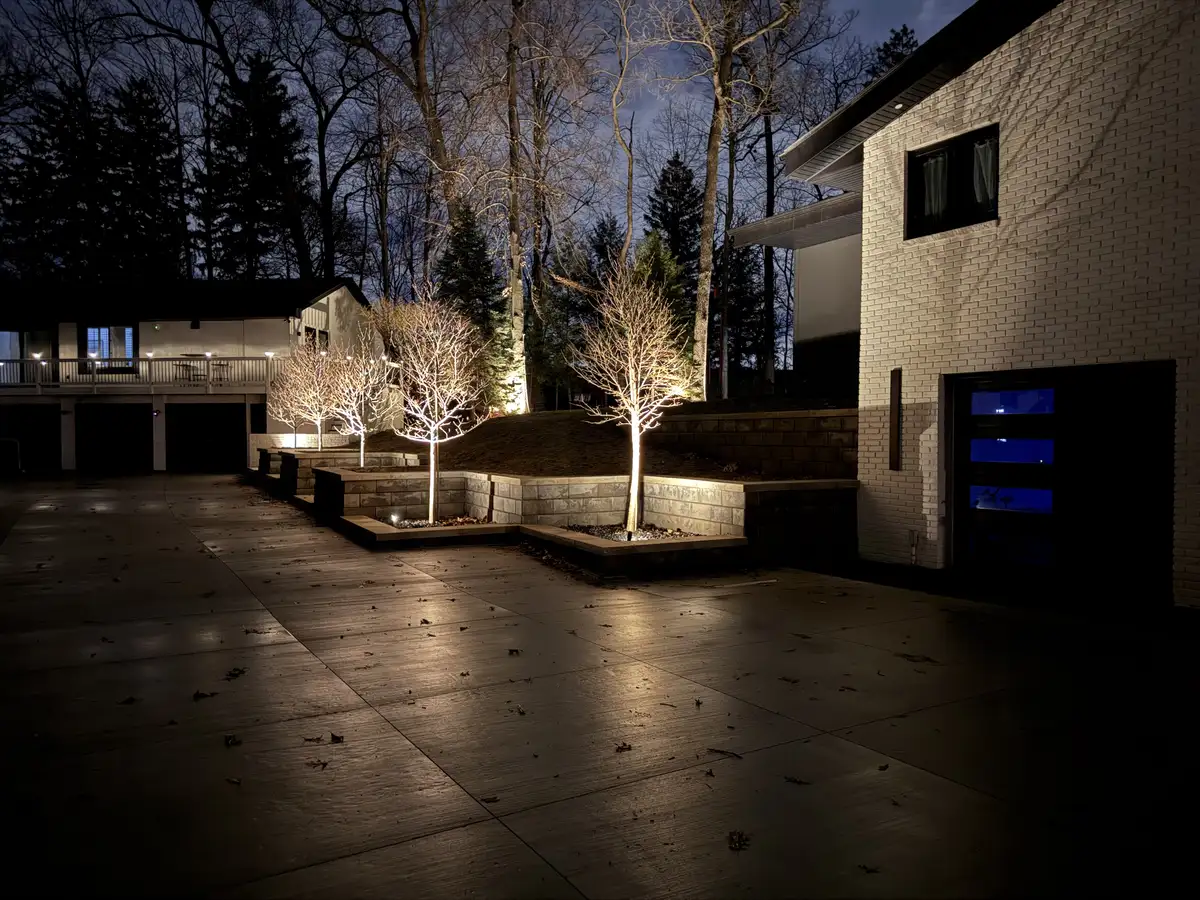
Booking landscaping is easier when the conversation begins with how the property should work—not a list of plants or a guess at labor hours. Troy homeowners often need several concerns addressed together: curb appeal, water movement, aging walks or patios, shade from mature trees, safer steps, privacy, or planting that will not demand constant attention.
Earth Art Landscaping has planned and built residential and commercial landscapes across Oakland County since 1987. Before requesting an estimate, use the questions below to define the result you want and determine whether a proposal accounts for the conditions that can affect it.
Five Details To Have Ready
- The part of the property you want to improve and how you want to use it.
- Photos of the work area, access path, slopes, downspouts, and wet spots after rain.
- Features or healthy plants that should remain.
- Your preferred timing and any work you may want to add in a later phase.
- The level of ongoing watering, pruning, cleanup, and seasonal care you expect to manage.
1. What Problem Should The Landscaping Solve?
“Improve the yard” can mean several different things. A front entry may need clearer circulation and four-season structure. A backyard may need a level gathering area, privacy, or a better connection from the house. A side yard may need drainage and a durable walk rather than more planting.
Rank the outcomes that matter most. This gives the contractor a better basis for recommending landscaping, a focused planting update, or a coordinated landscape design that connects multiple parts of the property.
2. How Will Troy Site Conditions Change The Plan?
A useful proposal should respond to the property in front of it. Ask how grade, water movement, soil condition, sunlight, mature roots, utilities, and equipment access affect the recommendation. Clay-heavy or compacted soil can hold water differently from amended planting soil. Shade can vary sharply between spring and summer. A narrow gate may change how excavation and material delivery are handled.
For patios, walks, steps, and walls, ask how drainage and Michigan freeze-thaw cycles influence base preparation, pitch, transitions, and material selection. The Troy service-area page explains more of the local planning context Earth Art considers for established properties.
3. What Exactly Is Included In The Proposal?
Do not compare totals until the scopes describe the same work. Depending on the project, a written proposal may need to address removals, excavation, hauling, soil or aggregate preparation, grading, drainage, materials, plant sizes and quantities, installation, cleanup, and restoration where equipment crossed the lawn or drive.
If the project includes a new patio, ask how steps, walkways, door thresholds, seating, and surrounding beds connect to it. If grade changes require a retaining wall, ask how that work affects drainage and usable space. Clear exclusions are as important as clear inclusions.
4. Should I Compare Hourly Rates Or Complete Project Scope?
Search results often reduce landscape pricing to an hourly number, but that number does not explain the finished result. Crew size, equipment, delivery, disposal, travel, supervision, insurance, access, and material handling all affect what an hour represents. A low rate can still produce a higher total if important work is missing or takes longer.
For limited labor, hourly pricing may be relevant. For design-and-build landscaping, compare the complete written scope, material and plant specifications, preparation, exclusions, and how changes will be approved. Ask what the price is intended to deliver rather than whether one isolated hourly figure sounds high.
5. Is There A Typical Cost To Landscape A Troy Yard?
A single average cannot account for the difference between renovating one planting bed and rebuilding a property with grading, drainage, patios, walls, lighting, and new planting. Even similar-looking yards can require different preparation because of access, removal, soil, elevation, roots, or restoration.
A more useful cost conversation starts with priorities. Ask which elements must be completed together, which can be phased, and which existing features can remain. Good phasing protects finished work and reserves the correct space and elevations for later additions.
6. Does The Planting Plan Work Beyond Installation Day?
Ask why each plant fits its location and what it will need as it matures. Sun exposure, soil moisture, winter conditions, mature width, views from the house, and nearby walks or structures should all influence selection and spacing. The goal is not to make a new bed look packed on day one; it is to give the composition room to develop.
The “rule of three” is often mentioned in landscape design. Repeating plants or using odd-numbered groupings can create rhythm, but it is a guideline rather than a formula. Three large shrubs may be too many for a narrow bed, while a mass of smaller perennials may need more than three. Scale, mature size, site conditions, and the overall design come first.
7. What Maintenance Will The Finished Landscape Need?
Low-maintenance does not mean no maintenance. New plants need establishment watering. Beds need periodic weeding, edging, and mulch care. Some shrubs need pruning; perennials may need spring or fall cleanup. Paver joints, drainage outlets, lighting, and water features have their own care needs.
Before booking, ask what should happen during the first growing season and what recurring care is realistic after that. If you prefer simpler upkeep, say so during design—not after a high-maintenance plant palette has been selected.
8. What Should Be Settled Before Work Is Scheduled?
Confirm the final scope, materials, plant quantities, assumptions, exclusions, access route, payment terms, and change process. Ask which selections must be made before scheduling and how weather or material availability could affect sequence. If other contractors are involved, clarify who coordinates utilities, irrigation, electrical work, or building-related details.
These questions help turn an attractive idea into a buildable plan. They also make it easier to compare proposals on preparation, function, durability, and care—not price alone.
Frequently Asked Questions
What should Troy homeowners ask before hiring a landscaper?
Ask what is included in the scope, how the plan responds to drainage, grade, soil, sunlight, mature trees, and access, which materials and plant quantities are specified, what is excluded, how changes are handled, and what care the finished landscape will need.
What is the average cost to landscape a yard?
There is no useful average for every yard because scope, access, removal, grading, drainage, material choices, plant sizes, equipment, and restoration vary. Compare written scopes for the same result instead of applying a broad average to a specific property.
Is $100 an hour too much for landscape work?
An hourly number alone does not show crew size, equipment, travel, delivery, disposal, insurance, supervision, or the amount of finished work. For design-and-build landscaping, a detailed project scope is usually more useful than judging one hourly rate.
What is the rule of three in landscaping?
The rule of three is a design guideline that uses repeated or odd-numbered groupings to create rhythm and visual unity. It is not a fixed planting formula; mature plant size, available space, sunlight, moisture, and maintenance still determine the right quantities and spacing.
How do I request a landscaping quote in Troy, MI?
Use the Earth Art Landscaping contact page or call 810-343-4799. Share the property address, current photos, the area you want to change, your priorities, known drainage or access concerns, desired timing, and any improvements you may want to add later.